
Top 10 Potassium-Rich Foods
Discover the top ten foods with the highest content of potassium, the mineral that supports normal nervous system and muscle function. Do you know which food takes the number 1 spot?

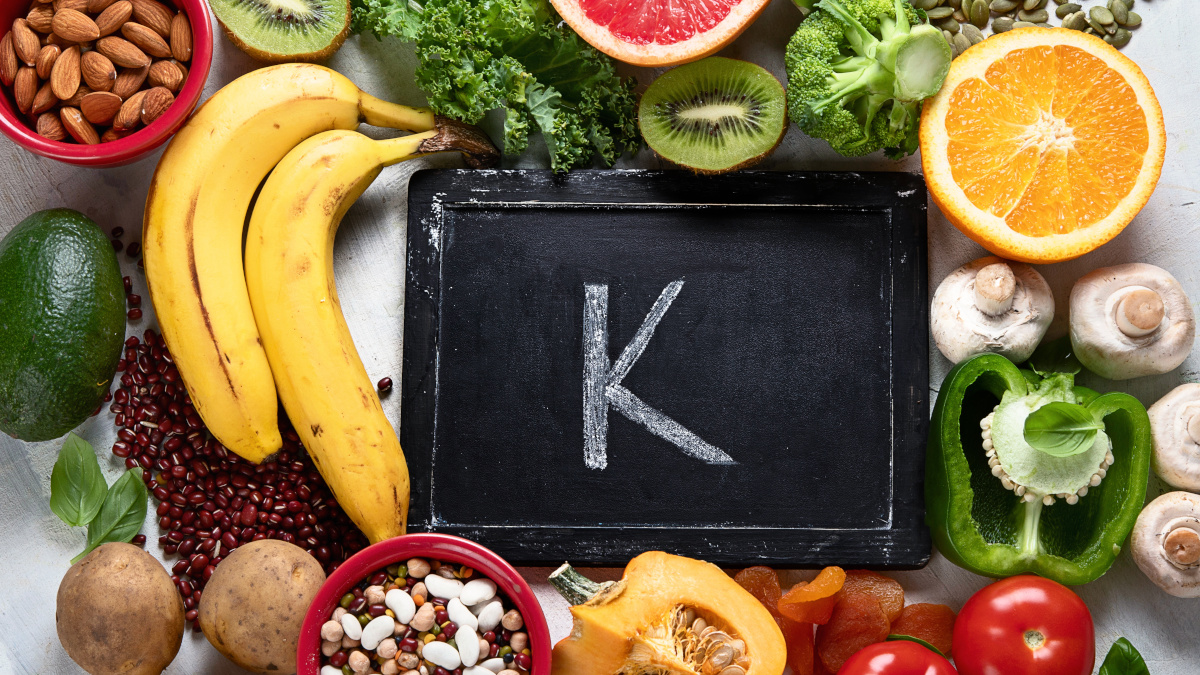
The Health Benefits of Potassium
Potassium is a mineral with the symbol K for kalium (the medieval Latin for ‘potash’). It is an electrolyte: it carries an electric charge when dissolved in the blood and other body fluids (1).
Potassium supports:
- Normal function of the nervous system;
- Normal muscle function;
- And normal blood pressure.
We obtain potassium from our diet (2).
Processed Food and Potassium Deficiency
Modern diets, which often contain high levels of processed food, are low in potassium, potentially leading to deficiency (3). All the more so as the amount of potassium the body needs to function properly depends on the amount of sodium consumed. In other words: the more salt you eat, the greater your need for potassium. And as a rule, processed food is very high in salt.
Thus potassium requirements vary between 2,000 mg and 8,000 mg a day depending on the amount of salt consumed.
It is worth highlighting that people who are trying to lose fat and gain muscle mass, who are doing lot of sport and eating a substantial amount of dairy foods, can easily become deficient in potassium. Perspiration results in significant potassium loss, and at the same time, dairy products (especially cheese) are usually high in salt(4).
As an alkaline compound, this mineral is also a valuable aid for those following an acid-base balance diet. So without further ado, here are the top 10 potassium-rich foods!
10) Cured ham with 556mg of potassium per 100g
100g of cured ham provides almost 30% of the daily recommended intake for potassium. But take care not to eat excessive amounts, and make sure you choose ham which is nitrite- and nitrate-free, such as Parma ham.
9) Hazelnuts with 606 mg of potassium per 100 g
The queen of European nuts (along with the potassium-rich almond); the hazelnut constitutes an excellent food for curbing hunger: a 30 g handful will easily satisfy an attack of the munchies! As well as their high potassium content, hazelnuts are also a great source of proteins and lipids.
8) Prunes with 657 mg of potassium per 100 g
Popular with sportspeople, particularly those who engage in endurance sports, prunes are veritable treasure troves of nutrients. High in calories but also in vitamins (E, B1, B2, B3, B5, and B6) and, of course, potassium, they help maintain normalintestinal transit. In short – and especially if you experience constipation – eating 100 g or so of prunes a day is a good way of increasing your potassium intake.
7) Peanut butter with 673 mg of potassium per 100 g
We are staying with the high-calorie foods for a moment to move onto peanut butter, or more precisely, natural, additive-free peanut butter. Like hazelnuts, peanuts are an excellent source of fats and protein, but they also contain a good level of potassium. As with any high-calorie food, moderation is key: just one or two tablespoons a day is enough to satisfy a hunger pang and help boost your potassium intake.
6) 72% dark chocolate with 700 mg of potassium per 100 g
You now have a good excuse to eat a few squares of dark chocolate every day: it is a valuable source of potassium! What is more, dark chocolate containing at least 72% cocoa is relativelylow in calories and contains protein, good fats and polyphenols.
5) Raisins with 773 mg of potassium per 100 g
Raisins provide 773 mg of potassium per 100 g. So you can vary your potassium-rich snacks throughout the week by alternating between a handful of hazelnuts, and one of raisins, etc.
4) Haricot beans with 1660 mg of potassium per 100 g
Snacks are all well and good but sometimes we need a nourishing food that can form the basis of a proper meal: haricot beans. These nutritious, high-protein, moderate-calorie pulses rank higher than all the previously-mentioned potassium sources with 1660 mg per 100 g.
3) Brewer’s yeast with 2,460 mg of potassium per 100 g
Perfect for sprinkling on salads and soups, brewer’s yeast contains a high level of potassium with almost 2,500 mg per 100 g. Of course it would be hard to consume 100 g a day, but each spoonful takes you closer to your daily requirement for potassium.
2) Sundried tomatoes with 3,430 mg of potassium per 100 g
They are delicious, they add flavor to cooked dishes, salads, savory tarts, and other recipes. Sun-dried tomatoes take second place on the podium, providing 3,430 mg of potassium per 100 g. Fresh tomatoes too are an excellent source of potassium. So as soon as summer’s here, make sure you stock up on tomatoes.
1) Dried kombu seaweed with a record 10,600 mg of potassium per 100 g
Dried kombu kelp (or seaweed) is the potassium record-breaker, with 10,600 mg per 100 g (6). As Asian cuisine has grown in popularity across the world, dried kombu has become more widely available and it can be used in many different ways in a variety of recipes. But one of the simplest is to sprinkle a little on your dishes, like brewer’s yeast.
A Few Potassium Supplements of Interest
It is worth adding here that dried dates, raw fennel, bananas, coconuts, and dried apricots are also good dietary sources of potassium.
To increase your intake of this key mineral, you could also take a potassium supplement, such as the classic Potassium Orotate from SuperSmart, which provides 90 mg per daily dose.
Less absorbable than the latter, potassium bicarbonate is generally included in supplements at a higher dose (SuperSmart's Potassium Bicarbonate, for example, contains 2,100 mg of potassium per daily dose).
Given that potassium helps maintain normal blood pressure, it also features in certain synergistic formulations. SuperSmart's supplement Tensix, for example, combines potassium, arginine, and extract of hawthorn leaf, which supports normal cardiovascular health.
If you want to obtain the benefits of several minerals from a single capsule, then try a mineral complex (such as MultiMineral Complex, rich in potassium, as well as magnesium, iodine, etc.)
References
- https://www.academie-medecine.fr/le-dictionnaire/index.php?q=potassium
- SKRABAL, F., AUBÖCK, T., et HORTNAGL, H. Low sodium/high potassium diet for prevention of hypertension: probable mechanisms of action. The Lancet, 1981, vol. 318, no 8252, p. 895-900.
- FREGLY, MELVIN J. Estimates of sodium and potassium intake. Annals of internal medicine, 1983, vol. 98, no 5_Part_2, p. 792-799.
- BIGARD, X. 6 Vitamines, minéraux, oligoéléments et sports. Nutrition du sportif, 2017, p. 139.
- EPPENDORFER, Wilfried H. et BILLE, Søren W. Free and total amino acid composition of edible parts of beans, kale, spinach, cauliflower and potatoes as influenced by nitrogen fertilisation and phosphorus and potassium deficiency. Journal of the Science of Food and Agriculture, 1996, vol. 71, no 4, p. 449-458.
- KOLB, Nada, VALLORANI, Luciana, MILANOVIĆ, Nada, et al.Evaluation of marine algae wakame (Undaria pinnatifida) and kombu (Laminaria digitata japonica) as food supplements. Food Technology and Biotechnology, 2004, vol. 42, no 1, p. 57-61.
Keywords


53 Days
Diversity, Delivery, Quality
The product quality, delivery, pricing and diversity of product makes me a satisfied (contented) customer.
JENKINS Rose
53 Days
Good quality
I've ordered supplements from this company three times now. I feel a difference for sure when I take the supplements, their shipping is fast and their quality is good. I'm glad I found them
Monica G
56 Days
Good products
Good products , fast delivery
Jacqueline
58 Days
fast and quick customer service…
fast and quick customer service products are shipped immediately
Michele Dunn
66 Days
Reliable in all ways as a company and…
Reliable in all ways as a company and products available.
DOMINIC
69 Days
Love Supersmart's products!
Their products work!
Diane
71 Days
Excellent experience, as always.
Very fast delivery. Very high quality products Very well made website: easy to navigate, easy to understand and very good and thorough description of each product. Thumbs up!
BUISSON Laurence
80 Days
Dania is Funia
The experience was great because the representative was so personal with me. She was knowledgeable and friendly. I like that she didn't act like a robot and truly was a quality voice behind a quality company. I will continue to purchase from Supersmart!!
Eric Ostovani
83 Days
no time to do your market research
no time to do your market research
David Schwartz
85 Days
Always follow through with!
Always follow through with!
DOMINIC
86 Days
Good product's good service
Good product's good service
PERCY
87 Days
Excellent
Excellent, thank you!
WRIGHT Connie
88 Days
I appreciate the ease in ordering the…
I appreciate the ease in ordering the supplements I need from SuperSmart. This is my 3rd order. And I really like it when I’m informed of any specials being offered. Thank you!
Vikki L
92 Days
My Nutritionist
My Nutritionist Dr. Jill MacDougal steer me to these Super Smart vitamins and minerals and I love them! Dr. Jill has Died of Colon Cancer and I will miss her Dearly! Steve
Steve, Flushing, MI
103 Days
We ordered the SuperSmart for nerve…
We ordered the SuperSmart nerve supplement and it actually works as it offers relief for foot pain. Very happy that we decided to give it a try.
Suzanne Poyer